
The rise of AI-driven automation is transforming how traders interact with financial markets—and prediction markets are at the center of this shift. Platforms like Polymarket and Kalshi have opened the door to trading on real-world events, from elections and economic data to crypto price movements. Now, with the emergence of OpenClaw AI, traders can automate these strategies with unprecedented speed and efficiency.
OpenClaw AI introduces a new paradigm: instead of manually analyzing markets and executing trades, users can deploy intelligent agents that monitor data, identify opportunities, and act instantly. This creates a powerful advantage in prediction markets, where prices change rapidly and timing is everything.
However, while the opportunity is significant, so are the risks. Most traders underestimate the importance of infrastructure, latency, and security—factors that can make or break profitability. In this guide, we’ll break down how OpenClaw works, why prediction markets are uniquely suited for AI trading, and what you need to understand before getting started.
What Is OpenClaw AI and Why It’s Changing Trading in 2026
Open-Source AI Agent Overview
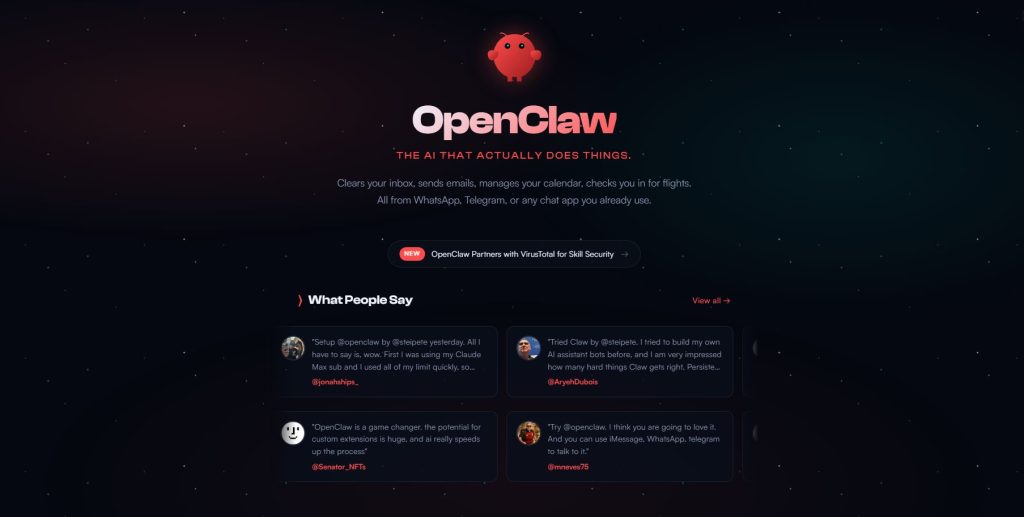
OpenClaw AI is an open-source autonomous agent designed to execute complex tasks through modular extensions known as “skills.” Instead of relying on traditional trading bots with rigid logic, OpenClaw leverages natural language processing and machine intelligence to interpret instructions and dynamically adapt to market conditions.
This flexibility allows traders to build highly customized workflows—from simple monitoring scripts to fully automated trading systems operating across multiple platforms.
Automation of Trading Workflows
One of OpenClaw’s biggest advantages is its ability to automate entire trading pipelines. Rather than executing isolated trades, the AI can:
- Monitor live market data continuously
- Analyze price movements and probabilities
- Execute trades based on predefined strategies
- Adjust positions dynamically as conditions change
This level of automation reduces human error and enables 24/7 trading without manual intervention—an essential feature in fast-moving prediction markets.
Growth Stats (Users, GitHub Traction)
OpenClaw has seen explosive growth since its launch, quickly becoming one of the most talked-about AI trading tools in 2026. Within a short period:
- It attracted hundreds of thousands of developers and traders
- Gained massive traction on GitHub with rapid community contributions
- Built a large ecosystem of third-party skills, including trading-focused integrations
This rapid adoption reflects a broader trend: traders are increasingly shifting toward AI-assisted decision-making to stay competitive.
Why Prediction Markets Are Ideal for AI
Prediction markets are uniquely suited for AI automation due to their structure and dynamics:
- Data-driven pricing: Prices directly reflect probabilities, making them easier for AI to analyze
- Frequent inefficiencies: Markets often lag behind real-world information
- Event-based outcomes: AI can process news and data faster than humans
- High-speed opportunities: Arbitrage windows can exist for only seconds
Because of these characteristics, AI agents like OpenClaw can identify and act on opportunities far more efficiently than manual traders.
Understanding Prediction Market Trading (Polymarket vs Kalshi)
How Prediction Markets Work
Prediction markets allow users to trade on the outcome of future events. Instead of buying traditional assets, traders buy “YES” or “NO” shares representing the probability of an event occurring.
- Prices range from 0 to 1 (or $0 to $1)
- A price of 0.70 = 70% probability of the event happening
- At settlement:
- YES shares pay $1 if the event occurs
- NO shares pay $1 if the event does not occur
This structure makes prediction markets intuitive while also enabling sophisticated trading strategies.
YES/NO Contract Mechanics
Each trade involves two sides:
- Buying YES means you believe the event will happen
- Buying NO means you believe it will not
Traders can profit by:
- Buying undervalued probabilities
- Selling overvalued positions
- Providing liquidity through market-making
- Exploiting short-term inefficiencies
Because prices constantly adjust based on supply and demand, timing and execution speed are critical.
Polymarket Overview
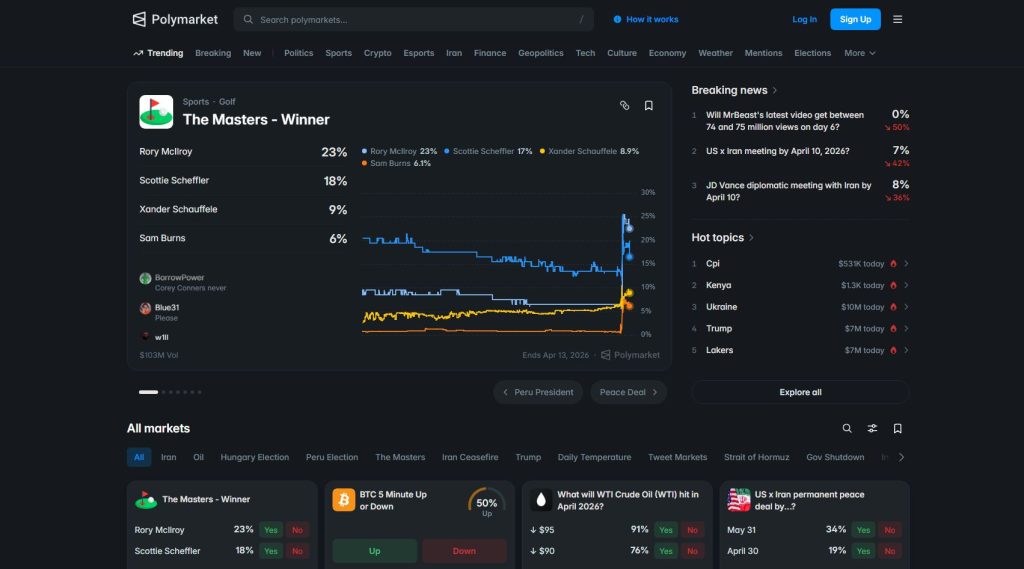
Polymarket is a crypto-based prediction market platform built on blockchain infrastructure.
Key Features:
- Uses USDC (on Polygon network) for trading
- Open to global users (with fewer restrictions)
- Fast execution and real-time order book
Trading Advantages:
- Ideal for arbitrage strategies
- Supports high-frequency trading approaches
- Offers market-making opportunities with fee incentives
Polymarket’s speed and accessibility make it a popular choice for AI-driven trading systems like OpenClaw.
Kalshi Overview
Kalshi is a regulated prediction market platform operating within the United States.
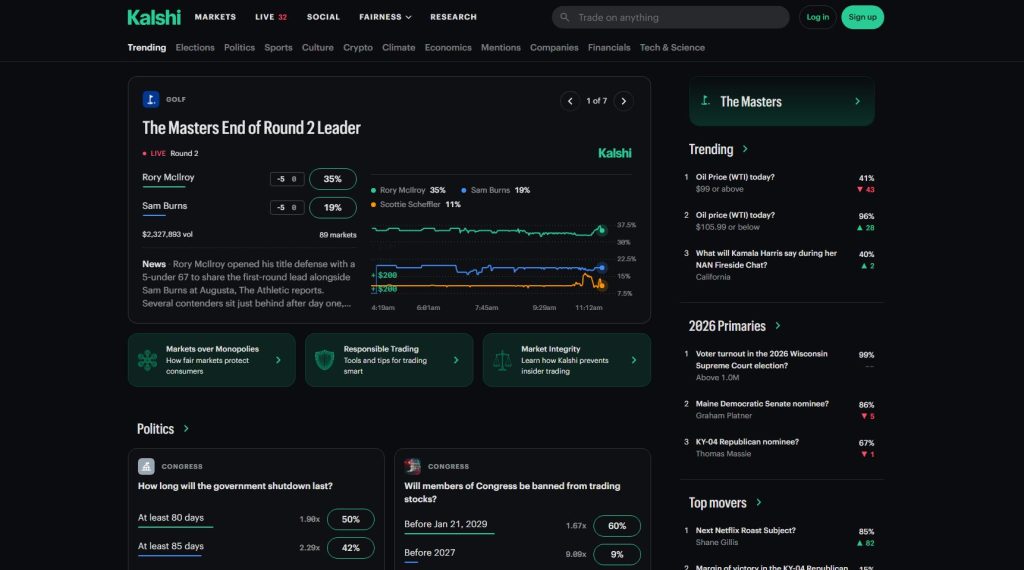
Key Features:
- Fully CFTC-regulated exchange
- Trades are settled in USD
- Focus on economic indicators and macro events
Trading Advantages:
- Institutional-grade infrastructure
- Higher regulatory trust and compliance
- Reliable data tied to official economic releases
While Kalshi is more restrictive than Polymarket, it provides a structured environment ideal for traders seeking regulatory clarity and stability.
Why OpenClaw AI Is Perfect for Prediction Markets
Processes News Faster Than Humans
In prediction markets, information is everything—and speed determines profitability. OpenClaw AI can monitor multiple data sources simultaneously, including news feeds, social media, economic releases, and on-chain signals.
Unlike human traders who react seconds or minutes later, OpenClaw processes and interprets new information instantly. This allows it to detect shifts in market sentiment before prices fully adjust, giving traders a critical edge in fast-moving markets.
Executes Trades 24/7
Prediction markets never truly sleep, especially crypto-based platforms like Polymarket. Opportunities can appear at any time—often when human traders are offline.
OpenClaw AI operates continuously, executing trades around the clock without fatigue or delay. This ensures:
- No missed opportunities
- Immediate reaction to market changes
- Consistent strategy execution
For traders aiming to compete in high-speed environments, 24/7 automation is not optional—it’s essential.
Identifies Mispriced Probabilities
Prediction markets frequently misprice probabilities due to emotional trading, low liquidity, or delayed information. OpenClaw AI excels at identifying these inefficiencies by:
- Comparing market prices with real-world data
- Analyzing historical patterns
- Detecting anomalies in pricing behavior
For example, if a market implies a 60% probability but real-world data suggests 75%, OpenClaw can flag and execute that opportunity instantly.
Automates Micro-Trading Strategies
Many profitable strategies in prediction markets rely on small, repeated gains rather than large one-time wins. OpenClaw enables:
- High-frequency micro trades
- Automated entry and exit points
- Continuous reinvestment of profits
These micro-trading strategies are nearly impossible to execute manually at scale, but AI automation makes them practical and efficient.
Real Profit Data vs Reality (What Most Guides Won’t Tell You)
Verified Profit Examples
There are real success stories in OpenClaw-powered trading—but they often represent the top fraction of users.
- Some advanced bots have reportedly generated $70,000 to over $1.7 million in profits
- High-frequency trading systems capitalize on tiny inefficiencies across thousands of trades
- Market-making bots earn consistent returns through spread capture and fee rebates
These results are typically achieved by traders with:
- Advanced infrastructure (low-latency VPS)
- Optimized strategies
- Deep technical understanding
The Harsh Reality
While success stories dominate headlines, the broader reality is far less optimistic.
- Around 92% of traders lose money in prediction markets
- Most trades generate very small margins—often $0.10 to $0.30 per trade
- Competition is intense, with professional bots dominating execution speed
Additional challenges include:
- Shrinking arbitrage windows
- Increasing transaction costs
- Rapidly adapting market conditions
The takeaway is clear: profitability is possible, but far from guaranteed. Without the right setup and strategy, most traders struggle to break even.
Best OpenClaw Trading Strategies in 2026
Market Making (Most Sustainable)
Market making remains one of the most reliable strategies for OpenClaw users.
How it works:
- Place buy and sell orders on both sides of the market
- Profit from the spread between prices
- Earn additional rewards through fee rebates
Key benefits:
- Consistent, lower-risk returns
- Works well in high-liquidity markets
- Scales effectively with automation
However, success depends heavily on execution speed and order placement efficiency—making VPS infrastructure critical.
News-Based Arbitrage
This strategy focuses on reacting to breaking information before the market fully adjusts.
Examples include:
- Economic data releases (CPI, interest rates)
- Political announcements
- Crypto market movements
OpenClaw scans multiple data sources in real time and executes trades within seconds, capturing early price discrepancies.
Challenge:
As more traders adopt AI, these opportunities are becoming shorter-lived and more competitive.
Micro-Scalping Strategy
Micro-scalping involves capturing very small profits across a large number of trades.
Key characteristics:
- High trade frequency
- Small margins per trade
- Continuous compounding
OpenClaw automates this process by:
- Identifying short-term price movements
- Entering and exiting positions rapidly
- Repeating the process at scale
This strategy is highly dependent on low latency and fast execution speeds.
Cross-Market Analysis (Advanced)
Advanced traders use OpenClaw to analyze inefficiencies between different platforms—primarily Polymarket and Kalshi.
How it works:
- Compare probabilities for similar events across platforms
- Identify discrepancies in pricing
- Execute trades to exploit the gap
Example:
- Polymarket shows 65% probability
- Kalshi shows 72% probability
- Opportunity exists to trade the difference
This strategy requires:
- Access to both markets
- Advanced data analysis
- Fast execution infrastructure
VPS Setup for OpenClaw Trading (Critical for Speed & Profitability)
Why VPS Is Mandatory
If you’re serious about using OpenClaw AI for prediction market trading, running it on a local machine is not enough. A Virtual Private Server (VPS) is essential for maintaining performance, reliability, and execution speed.
24/7 Uptime
Markets move at all hours, and opportunities don’t wait. A VPS ensures your OpenClaw agent runs continuously without interruptions caused by power outages, internet issues, or system shutdowns.
Low Latency Execution
In prediction markets, even milliseconds matter. A VPS located close to exchange infrastructure reduces latency, allowing your bot to:
- Execute trades faster
- Capture arbitrage opportunities before competitors
- Improve order fill rates
Stability for Bots
Trading bots require consistent environments to function properly. VPS hosting provides:
- Dedicated resources
- Minimal downtime
- Reliable performance for long-running processes
Without a VPS, you’re at a significant disadvantage against professional traders using optimized infrastructure.
Best VPS Locations for Each Platform
Choosing the right VPS location directly impacts your trading performance. The closer your server is to the exchange infrastructure, the faster your execution.
For Polymarket Trading
Dublin VPS → Best Latency to European Nodes
Dublin offers excellent connectivity to major cloud and blockchain infrastructure providers. It’s a strong choice for reducing delays when interacting with Polymarket’s backend systems.
Amsterdam VPS → Ideal for High-Frequency Execution
Amsterdam is one of Europe’s largest internet hubs, making it perfect for high-frequency trading strategies. It provides ultra-low latency and fast routing to key endpoints.
Why It Matters:
Reduced execution delay means:
- Faster order placement
- Better arbitrage capture
- Higher success rate in competitive markets
For Kalshi Trading
Chicago VPS → Closest to US Exchange Infrastructure
Kalshi operates within the United States, and Chicago is a major financial hub with proximity to exchange systems.
Benefits:
- Lower latency to Kalshi servers
- Faster execution for regulated markets
- More reliable trade timing during key economic events
Why Choose TradingVPS
To maximize OpenClaw’s potential, your infrastructure must be built specifically for trading—and that’s where TradingVPS comes in.
Optimized for AI Trading Workloads
TradingVPS environments are configured to handle AI agents and automated trading systems efficiently, ensuring smooth performance even under heavy workloads.
Low-Latency Routing
Strategically located servers in Dublin, Amsterdam, and Chicago provide optimal routing paths for both Polymarket and Kalshi trading.
24/7 Uptime for Automation
Your OpenClaw agent runs continuously without interruption, allowing you to capture opportunities around the clock.
Ideal for OpenClaw Deployment
Pre-configured environments make it easy to deploy, run, and scale your AI trading setup without complex server management.
Step-by-Step OpenClaw Setup for Trading
Installation
Getting started with OpenClaw is straightforward, but it’s important to follow the correct steps.
1. Install OpenClaw
- Clone the OpenClaw repository or use the official installer
- Set up dependencies and runtime environment
2. Add Trading Skills
- Install Polymarket trading skill for live execution
- Add Kalshi monitoring or trading integrations
- Verify that all required modules are active
Environment Configuration
Before running your bot, you need to configure essential components.
API Keys
- Connect to required services (LLM providers, data sources)
- Ensure secure storage of credentials
Wallet Setup
- Create a dedicated trading wallet
- Fund it with required assets (e.g., USDC for Polymarket)
- Never use your primary wallet for automation
Proxy Configuration
- Use rotating or residential proxies if required
- Helps bypass rate limits and improves connectivity
- Essential for stable interaction with certain APIs
Running Your First Trade
Once everything is configured, start with a controlled test.
Testing with Small Capital
- Begin with minimal funds
- Validate strategy performance
- Identify any execution issues
Monitoring Logs
- Track bot activity in real time
- Analyze trade execution and errors
- Optimize performance based on results
Starting small allows you to refine your setup before scaling, reducing the risk of costly mistakes.
Security Risks You MUST Understand Before Using OpenClaw
Malicious Skills & Malware
One of the biggest risks in the OpenClaw ecosystem comes from third-party “skills.” While many are legitimate, others are designed with malicious intent.
Fake plugins can:
- Steal private keys from your wallet
- Inject hidden scripts into your trading workflow
- Redirect transactions without your knowledge
Because OpenClaw allows deep system access, installing an unverified skill can compromise your entire setup. Always treat new skills as potential threats until proven safe.
Agent Vulnerabilities
AI agents like OpenClaw operate with a high level of autonomy—and that introduces a larger attack surface.
Key risks include:
- Unauthorized command execution
- Prompt injection attacks
- Exploitation of external API connections
Since the agent interacts with multiple systems (wallets, APIs, exchanges), a single vulnerability can cascade into a major security breach.
No Insurance or Protection
Unlike traditional financial platforms, there is no safety net when using OpenClaw for trading.
- No insurance on funds
- No transaction reversal
- No centralized support for losses
If your funds are lost due to a bug, hack, or misconfiguration, recovery is unlikely. This makes risk management and security practices absolutely critical.
Best Security Practices
To protect your funds and infrastructure, follow these essential guidelines:
Use Sandboxing
- Run OpenClaw in an isolated environment
- Prevent unauthorized access to your system
Separate Wallets
- Use a dedicated wallet for trading
- Never expose your main holdings
Limit Permissions
- Only grant necessary access to skills
- Avoid full wallet control when not required
Additional best practices include regularly auditing your setup, updating dependencies, and avoiding unverified sources.
Common Mistakes Beginners Make
Overestimating Profits
Many new users expect quick and consistent profits based on viral success stories. In reality, margins are thin and competition is intense.
Ignoring Latency
Execution speed is one of the most critical factors in prediction market trading. Without low latency, even the best strategies can fail.
Using Public Strategies
Widely shared strategies quickly become ineffective as more traders adopt them. By the time a strategy becomes popular, its edge is often gone.
Not Using VPS
Running OpenClaw on a personal computer limits uptime, increases latency, and reduces reliability. This is one of the most common—and costly—mistakes beginners make.
Is OpenClaw Trading Worth It in 2026?
Pros vs Cons
Pros:
- Full automation of trading workflows
- Ability to react instantly to market changes
- Scalable strategies with AI support
Cons:
- High competition from advanced bots
- Technical setup required
- Significant security risks
Who Should Use It
OpenClaw trading is best suited for:
- Advanced traders seeking automation
- Developers building custom strategies
- Users willing to invest in infrastructure (VPS, tools)
It may not be ideal for complete beginners without technical knowledge or risk tolerance.
Realistic Expectations
OpenClaw is not a guaranteed profit machine. Success depends on:
- Strategy quality
- Execution speed
- Infrastructure setup
- Risk management discipline
Most traders will need time, testing, and iteration before achieving consistent results.
Conclusion: Building a Sustainable AI Trading Setup
To succeed with OpenClaw AI, you need more than just a powerful tool—you need a complete system.
Combine AI + VPS + Strategy
- Use OpenClaw for automation
- Deploy on a low-latency VPS (Dublin, Amsterdam, Chicago)
- Implement proven trading strategies
Focus on Risk Management
- Start with small capital
- Diversify strategies
- Continuously monitor performance
Treat It as Infrastructure, Not Passive Income
The most successful traders treat OpenClaw as part of a larger trading infrastructure—not a “set and forget” solution. Consistent profitability comes from optimization, not shortcuts
FAQs
Yes, OpenClaw can execute fully automated trades on Polymarket when integrated with the appropriate trading skills and configured correctly.
It can be profitable, but most traders lose money. Success depends on strategy, execution speed, and infrastructure setup.
Dublin(All features are available) and Amsterdam(Only API request is available) are best for Polymarket
Chicago is ideal for Kalshi due to proximity to US infrastructure
Basic technical knowledge is helpful, especially for setup and customization. However, many pre-built skills allow non-developers to get started with some guidance.