When you’re looking to take advantage of volatility, pre-market indicators, and making more precise moves, a basic setup just doesn’t cut it anymore. Smart traders separate their trading facilities with the best Virtual Private Server (VPS) to make the most of 2026.
In this comprehensive guide, we will understand the futures market in 2025 and 2026, explore how professional traders read early market signals, and explain why pairing the right platform for futures trading with elite VPS infrastructure is the best.
The Futures Market Boom in 2025 and 2026
Over the past two years, the futures market has experienced phenomenal growth, diverting volume from the older cash equity markets to the newer, leveraged and standardized futures contracts.
1. The Dominance of Micro Contracts
Retail participation has fundamentally changed with the introduction and growth of Micro E-mini contracts. By 2026, Micro E-mini volume accounts for over 45% of all equity index volume. Today, the volume of contracts traded through exchanges such as the Micro Nasdaq-100 (MNQ) averages well over 2.2 million contracts per day, and the Micro S&P 500 (MES) averages about 1.6 million contracts per day. These contracts, which are one-tenth the volume of regular E-minis, enable traders to scale their positions with enormous precision without needing institutional capital.
2. Interest Rate Volatility and Global Shifts
Central banks around the world have taken steps to adjust monetary policies over 2025 and 2026, resulting in higher interest rate volatility. Consequently, there has been a significant amount of trading activity in the 10-Year Note (ZN) futures market as a result of shifting rate expectations.
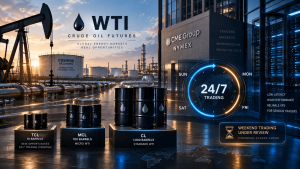
However, one commodity still dominates the daily trading volume, which is Crude Oil (CL), which has consistently traded above 1 million contracts daily and continues to hold the title of “king of commodities”.
3. The Section 1256 Tax Advantage
With the favorable tax treatment under Section 1256, it is no surprise that intelligent traders in the United States have turned to futures. Qualifying futures are taxed at a blended rate of 60% long-term capital gain and 40% short-term capital gain, and this is irrespective of the holding period of the futures.
This profound structural advantage has been a key driver in the migration of active traders from stocks to futures in 2026.
How to Read Index Futures Before the Market Opens?
One of the best benefits of utilizing a high-quality platform for futures trading is that you can gauge market sentiment long before the 9:30 a.m. EST open. Futures trade virtually round the clock, so they incorporate worldwide catalysts, including economic data released overnight, geopolitical events, and foreign market closures. Professional traders watch 3 major indexes to assess the market’s implied open:
- ES (E-mini S&P 500): Represents 500 large U.S. companies. It is the best indicator of risk-on or risk-off sentiment in the broad market.
- NQ (E-mini Nasdaq-100): Tech-heavy and highly volatile. A strong NQ coupled with a weaker Dow indicates tech leadership.
- YM (E-mini Dow Jones): Represents 30 blue-chip industrial companies. This strength is usually a sign of a value stock switch.
Understanding Fair Value and the Implied Open
One of the most common mistakes that retail traders make is that they take the overnight raw futures number literally. For example, if you hear “Dow futures are up 200 points,” it doesn’t mean the cash market will open 200 points higher.
The actual implied open is based on Fair Value, which is the spot index price based on short-term interest rates and expected dividends prior to exiting.
The actual direction of the market is a function of the difference between the live futures price and this Fair Value. When the ES futures are up 10 points, but Fair Value is up 15, the market could be opening weaker than the headlines indicate. You need a platform for futures trading that is able to compute and broadcast these discrepancies in a timely manner to process the data accurately.
What Actually Happens When You Place a Trade?
When you execute a trade, the data does not magically appear at the exchange. It goes through a strict four-step process, and if there’s any delay, jitter, or packet loss in the round trip, there will be slippage.
- Platform to Routing Layer: Your platform encodes the order and hands it off to the routing layer.
- Risk Check (FCM): Your Futures Commission Merchant performs microsecond checks on margin requirements and risk limits.
- The Exchange: The approved order is now sent to the matching engine of the Chicago Mercantile Exchange (CME) or a similar exchange.
- Execution and Confirmation: The liquidity is matched, and the fill confirmation travels back to your screen.
For example, in a fast and very liquid market such as the NQ or CL, a few milliseconds in between can result in losing your price by several ticks.
This is precisely why trading with a regular home broadband connection is a huge risk when running a sophisticated platform for futures trading.
Why is Chicago the Undisputed Best Location for Futures Trading?
In the futures market, location is key. The absolute best location for futures trading is Chicago.
That’s because the matching engines for the Chicago Mercantile Exchange (CME), where the ES, NQ, and CL contracts are all processed, are physically located in a data center just outside of Chicago in Aurora, Illinois.
When you are trading your algorithm from your home computer in New York, Texas, or Europe, your data must cross hundreds or thousands of miles to get to the CME. Having your platform for futures trading hosted on a VPS in Chicago decreases your network latency to sub-millisecond levels.
A Chicago VPS will get your orders to the CME order matching engine before the other retail traders. TradingVPS is designed with financial markets, algorithmic strategies, and high-frequency trading in mind. Your strategy will instantly benefit from unprecedented technological benefits when you host it at TradingVPS:
- High-Performance AMD Ryzen™ 9 9950X CPU: We have upgraded our compute power to the latest and greatest Ryzen™ 9 9950X CPU, ensuring that our single-threaded platforms process the complex order flow calculations without hesitation.
- DDR5 RAM and NVMe SSD Storage: Essential for rapidly processing large amounts of historical tick data, creating deep visualizations of footprints and market-depth.
- Ultra-Low Latency to Major Trading Platforms: Our data centers are strategically located to minimize the physical distance between your algorithms and the exchange matching engines.
- Support for Popular Trading Platforms: We support NinjaTrader, TradeStation, MetaTrader, cTrader, Bookmap, Optimus Flow, whatever you are using.
- 24/7 Technical Support: Markets don’t rest, and neither do we. Our professional help staff know the specifics of trading platforms and routing layers, and are here to help your systems run smoothly.
- Free DDoS Protection: Your automated strategies and proprietary algorithms are protected from malicious network attacks around the clock.
- Flexible Pricing Configurations: Perfectly scale your computational resources according to the complexity of your trading algorithms.
Trading the E-mini is no different; if you’re in the right spot, you’ll be able to get liquidity quicker than the retail public.
Final Thoughts
Having the best platform for futures trading is only half the battle, it must be used in conjunction with an execution environment that honors the “Mathematics of Recovery.
Risking more than 1-2% on each trade invites drawdowns that take an exponential amount of gains to overcome. You must be 100% certain that when you hit the “flatten” button, the order is transmitted to the CME immediately.
Trading is a high-class profession. A poor setup, lack of knowledge, or lack of equipment results in poor outcomes. Considering all trading requirements, TradingVPS is the optimal choice for traders in futures, forex, cryptocurrency, and prediction markets.
FAQs
A trading VPS is specifically optimized for financial trading, whereas ordinary web hosting provides website data to the browser. It offers fast clock speeds (such as the AMD Ryzen™ 9 9950X), NVMe storage dedicated to the platform, and direct, ultra-low latency connections to the financial exchanges, so your orders execute faster and more reliably.
Not at all. You can connect to a trading VPS as simply as connecting to a standard Windows computer. With Remote Desktop Protocol (RDP), you can log in to your server from any device, from anywhere in the world, and use your trading platforms as you would locally.
Many of the professionals typically use software with sophisticated charting, order flow, and algorithmic scripting capabilities. Some of the most common platforms used are NinjaTrader, TradeStation, MetaTrader, cTrader, and analytics software such as Bookmap or Sierra Chart.
This is because this spot activity brings in lots of new volume and liquidity, which can be at odds with the overnight sentiment. In addition, when the raw futures price is below the calculated “Fair Value,” the market is mathematically implied to be weaker than the headline futures price denotes.
You require the Internet to see the screen of your VPS, but the principal advantage is Risk Management. In the event of a failure in your home internet, your trading platform on the VPS will remain connected to the exchange without interruption, which means that any automated trading strategy and stop-loss orders will be executed perfectly.