Prediction markets have developed a lot in the last two years, and automation has become a major part of that growth. A polymarket trading bot enables traders to track markets, analyze real-time data, and make trades based on preset strategies rather than manual input. This is particularly useful on Polymarket, where the market value of a product can change in seconds, and execution time can make all the difference.
According to Finance Magnates (2026), many of the best-performing wallets on the platform use algorithmic trading, and the practice is becoming more popular in prediction markets. When it comes to trading with an automated system, selecting a suitable VPS location and low-latency infrastructure is as crucial as creating a profitable trading strategy.
What Is a Polymarket Trading Bot?
A polymarket trading bot is a type of software that automates trading on the Polymarket prediction market platform. While traditional trading software may demand manual execution, these bots constantly watch market conditions using Polymarket’s APIs and WebSocket feeds. They can respond to price changes much quicker than a human trader.
Today’s trading bots can:
- View several prediction markets at once.
- Implement trading strategies based on that information.
- Automatically make buy and sell orders.
- Manage open positions based on predefined rules.
- Reduce emotional decision-making during volatile markets.
How Does a Polymarket Trading Bot Work?
While there are different types of strategies out there, most trading bots go through a similar process.
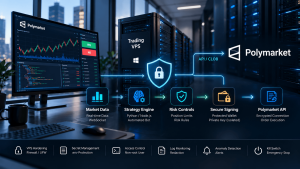
1. Collect Live Market Data
The bot receives live market updates all the time through Polymarket’s CLOB API and WebSockets. Rather than continually polling APIs, WebSocket feeds provide real-time updates, minimizing delays and ensuring the bot stays in sync with market activity. This gives real-time data regarding:
- Order book changes
- Price movements
- Market probabilities
- Trading volume
- Liquidity
2. Analyze Trading Opportunities
When new data comes in, the trading logic will determine if market conditions meet specific rules. This is an ongoing process during the trading session.
Depending on the strategy, the bot can analyze:
- Price discrepancies
- Market momentum
- Probability changes
- Order book imbalance
- Related market movements
3. Execute Orders Automatically
Once the trading conditions are fulfilled, the Bot submits orders directly to Polymarket’s trading infrastructure.
Limit orders are favored by most professional trading bots because they offer more control over the trading price and minimize slippage. So when expected profit margins are relatively low, maintaining a high level of execution quality becomes critical.
4. Manage Risk
Execution is only part of the trading process. A properly designed polymarket trading bot also controls risk by:
- Controlling position size
- Setting profit targets
- Limiting exposure
- Monitoring open positions
- Closing trades when strategy conditions change
What Types of Polymarket Trading Bots Are Used Today?
Not all Polymarket Trading Bots are created equal. The best bots are built on a specific edge and will not trade on all trades.
1. Arbitrage Bot
An arbitrage bot seeks to capitalize on the times when market prices are temporarily inconsistent.
A popular example is when the cost of purchasing both potential outcomes is less than the ultimate payout. Rather than picking a winner, the bot tries to take advantage of the price disparity. These opportunities don’t last long. A bot needs to recognize the imbalance and execute orders ASAP before the market changes its course.
2. Repricing Bot
A repricing bot is used to compare the market price with its calculated fair probability. For instance, if Bitcoin skyrockets and a corresponding prediction market fails to catch on, the bot might see one side of the market as being temporarily undervalued. It is then able to execute trades before the market catches up.
This strategy relies heavily on current data and swift execution and not predicting the long-term direction of the market.
3. Directional Arbitrage Bot
A directional arbitrage bot merges two concepts.
It first establishes a fairly even stance and then gradually moves more towards the side where its model sees more value. Rather than being strictly neutral, it will retain a partial hedge and include more upside potential if the forecast is accurate. This is done in order to increase the expected return while still maintaining control over the overall risk.
4. Multi-Market Bot
Prediction markets can respond to the same event at different times. A multi-market bot scans a number of markets at the same time and identifies pricing discrepancies that can occur temporarily across markets. Instead of analyzing each market individually, it looks through multiple contracts and finds opportunities that arise because of late repricing.
With multiple data streams being processed simultaneously, this approach requires robust infrastructure and continuous connectivity.
5. Order Book Imbalance Bot
The order book is a critical piece of information for professional traders as it provides real-time insight into the buying and selling pressure.
An order book imbalance bot analyzes and trades according to the liquidity, the bid-ask spread, and the temporary imbalance of supply and demand in the order book. It does not just follow the price of an asset but rather considers the positioning of orders before entering a trade. This kind of strategy frequently responds before substantial price changes are apparent on a regular chart.
Why Speed and Low Latency Matter More Than Ever?
Many traders spend months developing their trading strategies but neglect to consider one crucial aspect: execution speed.
The speed of action of a polymarket trading botdepends on the infrastructure behind it. Polymarket’s order matching system is based on a Central Limit Order Book (CLOB) that matches buy and sell orders. Orders are matched off-chain to speed up order matching, while settlement takes place on the Polygon blockchain. The benefit of this hybrid approach is that markets can update quickly, but the latency of the network also has a direct impact on trading performance.
Higher latency can result in:
- Delayed order execution
- Increased slippage
- Missed arbitrage opportunities
- Reduced fill rates
- Lower overall strategy performance
that is why skilled automated traders attach so much importance to vps location. a polymarket trading botthat runs on infrastructure near the Polymarket trading environment can minimize network latency and maximize the consistency of its performance, especially when market activity is high.
Why VPS Location Is Critical for a Polymarket Trading Bot?
For most online applications, choosing a server location is a minor technical decision. This directly impacts the execution quality of a Polymarket Trading Bot.
Each order made by your bot goes through the network before entering the trading infrastructure of Polymarket. The greater the distance between your VPS and trading engine, the longer it will take.
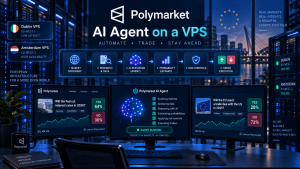
Polymarket’s trading infrastructure is based on a European environment, where the trading engine is hosted on the AWS eu-west-2 (London) region. As a result, traders typically find it to be beneficial to choose VPS servers with shorter routes to London.
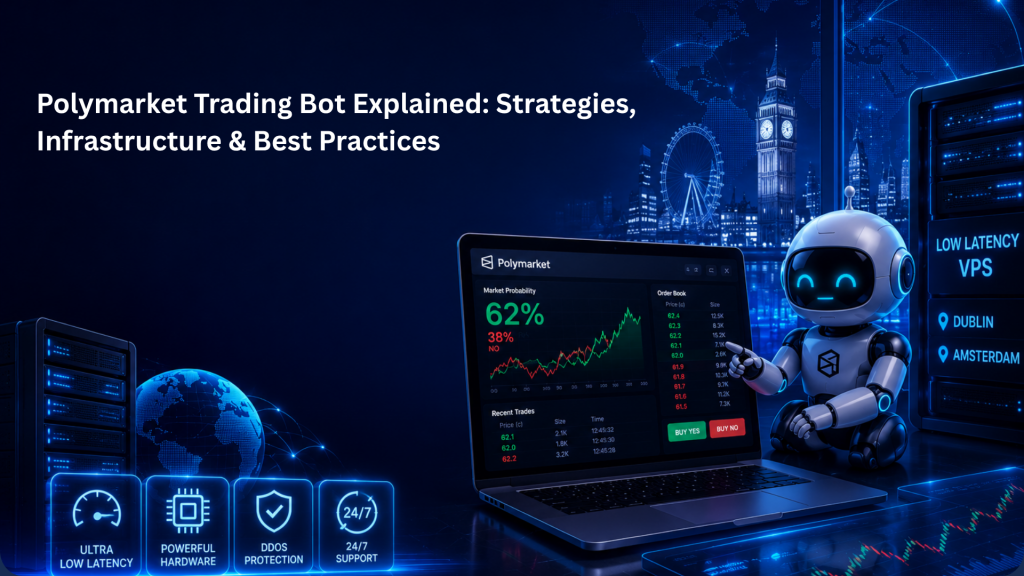
According to the network routing and latency measurements, Dublin and Amsterdam are two of the best options for automated trading on Polymarket.
1. Dublin: The Best Overall Choice
Dublin offers many traders the perfect combination of low latency with quality connectivity. Its close proximity to London’s infrastructure helps reduce round-trip communication time and submit orders more efficiently.
Dublin is not just about top speed; it’s about reliable performance over extended trading periods. A Dublin VPS is ideal for traders who:
- Run automated trading bots 24/7
- Execute API-based strategies
- Monitor multiple markets simultaneously
- Need stable and consistent execution
2. Amsterdam: Another Strong Option
Another great place to use a polymarket trading bot is Amsterdam. It features a robust European network for quick routing to Polymarket’s infrastructure, and also allows for low-latency API communication.
When it comes to API-driven approaches, Amsterdam is still one of the most feasible VPS locations. Here are some of the reasons why many algorithmic traders select Amsterdam:
- Excellent network connectivity
- Reliable infrastructure
- Low network latency
- Stable performance during high trading activity
What Should You Look for in a VPS for Polymarket Trading?
When evaluating infrastructure for a Polymarket Trading Bot, consider the following features:
- High Single-Core CPU Performance
High-frequency trading strategy devotes the bulk of its time to receiving updates from the market, analyzing the situation, and placing orders. The higher the speed of the CPU, the less time there will be for processing delays before orders are sent.
- Fast DDR5 Memory
With increased bandwidth and improved responsiveness compared to its earlier generations, DDR5 RAM aids bots in managing several market feeds more effectively.
- NVMe SSD Storage
By minimizing the delay in reading and writing trading data, fast NVMe SSD storage ensures that systems perform consistently even during long trading sessions.
- Reliable Uptime
Your VPS should offer high uptime so that your bot can continue monitoring opportunities even when you’re not sitting in front of your computer. Unexpected downtime may cause missed trades or leave open positions unmanaged.
- 24/7 Technical Support
A strong technical support team is available at all times, which reduces downtime and ensures a rapid recovery in case of issues.
Common Mistakes to Avoid When Running a Polymarket Trading Bot
A lot of traders spend weeks developing trading strategies and fail to recognize that they are making operational errors that impact their profitability over time. Some of the most frequently made errors are:
- Using REST APIs for Real-Time Decisions
REST APIs work well for retrieving market information, but they are not designed for high-speed market monitoring. Professional bots use WebSocket connections because they get order book updates without having to repeatedly request them.
- Ignoring Order Execution Quality
Many new traders believe that the market order is the fastest option. In fact, most experienced automated traders opt for limit orders whenever they can. For smaller pricing inefficiencies, expected returns can be maintained with better execution prices.
- Over-Optimizing Historical Data
An effective strategy on historic data can be ineffective in the live market. Prediction markets constantly change with varying levels of participation, trader behavior, and liquidity. Rely on rules that are regularly tested, adjusted, and monitored, rather than continuing to use them forever.
Why Infrastructure Still Matters for Automated Polymarket Trading?
A Polymarket Trading Bot operates without any downtime for long periods of time, processes live market data, signs orders, and interacts with the Polymarket APIs. Any instability in the underlying server can affect overall performance.
TradingVPS does not engage in a race for low-cost hosting, but it is about providing reliable trading platform performance for serious traders.
- AMD Ryzen™ 9 9950X processors
- High-speed DDR5 RAM
- Enterprise NVMe SSD storage
- Free DDoS protection
- 24/7 technical support
- Reliable infrastructure designed for automated trading
Conclusion
A well-designed polymarket trading bot can track the markets 24/7, automatically carry out specific trading strategies, and eliminate emotional decision-making. But it takes more than automation to achieve long-term success.
TradingVPS offers traders the performance they need with high-end hardware, servers placed in strategic locations in Dublin and Amsterdam for Polymarket traders, and infrastructure designed for automated trading.
FAQs
Yes. Most advanced bots are capable of watching several markets at a time. They can analyze multiple events, consider various probabilities, and make trades across multiple markets without manual intervention.
WebSockets provide real-time updates of the market, and bots can respond when the order book moves. This is more efficient than repeatedly sending API requests to check for new information.
Yes. Polymarket offers official APIs and SDKs for developers to integrate and create automated trading systems, interface with market data, and perform programmatic order management, while always adhering to the latest technical requirements of the platform.
No. Prediction markets are continuously evolving due to the changing liquidity, participant behavior, and competition. What works well today might need tweaks over time, so testing and optimization are crucial.
Traders are advised to test their trading logic, familiarize themselves with the architecture of the API features of Polymarket, perform trading tests in a simulated environment, and select robust infrastructure that can handle round-the-clock automated trading before launching a live bot.