
In modern algorithmic trading, market data is no longer just a utility service running quietly in the background. It has become one of the most important competitive advantages a trader can have. Every automated strategy, whether it is a simple momentum bot or a sophisticated multi-asset quantitative system, depends entirely on the speed, quality, and consistency of incoming market data. Without reliable data, even the most mathematically sound trading models can become unstable in live market conditions.
Many traders spend enormous amounts of time optimizing indicators, reducing strategy drawdowns, refining execution logic, or building advanced machine learning systems. However, one of the most common reasons automated systems fail in production is not strategy logic itself — it is poor market data infrastructure. Delayed quotes, missing ticks, inaccurate candles, unstable API connections, or inconsistent bid/ask spreads can quietly destroy strategy performance over time.
This becomes especially important in today’s highly electronic trading environment where execution speeds are measured in milliseconds. Markets move faster than ever before, liquidity shifts instantly, and algorithmic competition continues increasing across futures, forex, equities, crypto, and prediction markets. In these environments, traders are no longer competing only against other retail traders. They are competing against firms operating professional-grade infrastructure with direct exchange connectivity and ultra-low latency systems.
Because of this, selecting the right market data infrastructure is now one of the most important technical decisions any algorithmic trader can make.
Why Market Data Quality Matters More Than Most Traders Realize
The quality of your market data directly affects every stage of your trading workflow. It impacts strategy development, historical research, live execution, order routing, risk management, and even psychological confidence in your trading system.
For example, imagine a breakout trading strategy designed around high-volume momentum moves in CME futures markets. During backtesting, the strategy may appear highly profitable because the historical dataset looks clean and perfectly synchronized. However, once the system goes live, delayed quotes or inconsistent volume reporting can trigger late entries, poor fills, or false breakout confirmations. Suddenly, the live performance looks completely different from the historical simulation.
This is one of the biggest problems in algorithmic trading. Many traders unknowingly build strategies on unrealistic or incomplete datasets. Historical candles may contain gaps, volume data may differ between providers, or timestamps may not accurately reflect exchange sequencing. Small inconsistencies like these can compound into major performance distortions once real money is involved.
High-frequency and intraday traders are even more sensitive to these problems. Strategies operating on lower timeframes depend heavily on execution precision. A delay of even 20–50 milliseconds can significantly impact fill quality during volatile conditions. In fast-moving futures or forex markets, those milliseconds can determine whether a trade becomes profitable or immediately slips into negative territory.
Reliable market data is not simply about receiving prices quickly. It is about receiving clean, synchronized, exchange-grade information that reflects actual market conditions as accurately as possible.
Understanding the Difference Between Data Speed and Data Quality
Many traders focus exclusively on latency when evaluating market data providers, but speed alone does not guarantee better trading performance. A feed can be extremely fast while still containing inconsistencies, missing updates, or unreliable volume reporting.
Professional traders evaluate market data using several factors simultaneously. Latency is important because it determines how quickly your system reacts to market movement, but consistency and accuracy are equally critical. Some providers may deliver fast updates but struggle during periods of heavy volatility when exchanges experience large surges in order flow. Others may provide excellent historical coverage but lack the infrastructure required for low-latency real-time execution.
The best market data providers balance all of these characteristics together. They maintain reliable uptime, stable APIs, accurate timestamps, strong historical depth, and robust exchange connectivity. This combination creates an environment where trading systems behave consistently both in backtesting and live execution.
Another factor traders often overlook is market depth. Basic Level 1 data may be sufficient for long-term systems, but advanced strategies frequently require Level 2 order book information to properly evaluate liquidity conditions. Order book depth can reveal hidden pressure within the market and help execution systems estimate slippage more accurately.
For many quantitative traders, especially those operating automated futures or forex systems, market depth data becomes a critical component of strategy logic.
Why Historical Data Is Just as Important as Real-Time Feeds
Many traders focus heavily on live execution feeds while underestimating the importance of historical data quality. In reality, historical datasets are the foundation of every algorithmic trading strategy.
Backtesting depends entirely on historical accuracy. If your historical data contains inconsistencies, your strategy optimization process becomes unreliable. This can create false confidence and unrealistic expectations regarding future performance.
Professional-grade historical datasets should include adjustments for corporate actions, stock splits, dividends, and delisted securities. Without these adjustments, traders may unknowingly introduce survivorship bias into their testing process. Strategies may appear profitable simply because failed companies disappeared from the dataset entirely.
Tick-level historical data is especially valuable for serious quantitative research because it allows traders to reconstruct precise market conditions. This becomes important when testing scalping systems, order execution logic, or machine learning models that rely on microstructure behavior.
The larger and cleaner your dataset becomes, the more confidence you can have in your strategy research.
The Rise of Multi-Provider Market Data Architecture
One major shift in professional algorithmic trading is the move away from relying on a single market data provider. Instead, many traders now build layered market data systems using multiple providers simultaneously.
This approach improves reliability, redundancy, and flexibility.
For example, one provider may specialize in low-latency real-time equities data while another excels in affordable global historical datasets. A separate provider may handle options analytics or futures market depth. By combining specialized providers together, traders can optimize each layer of their trading stack independently.
This also creates protection against outages or API instability. Market data interruptions can become extremely expensive during volatile trading sessions. Professional firms therefore avoid depending entirely on one infrastructure source.
As algorithmic trading becomes more sophisticated, multi-provider architectures are becoming increasingly common even among independent retail traders.
Popular Market Data Providers for Algorithmic Trading
Different providers excel in different areas of trading infrastructure.
Polygon.io
Polygon.io is widely used for real-time equities, options, forex, and crypto market data. Its low-latency streaming infrastructure makes it popular among intraday traders and automated systems.
Best suited for:
- Real-time dashboards
- Intraday trading systems
- Multi-asset strategies
- Low-latency equities trading
Databento
Databento focuses heavily on institutional-grade market data with nanosecond timestamps and advanced historical datasets.
Best suited for:
- Quantitative research
- Futures trading
- HFT infrastructure
- Tick-level analytics
EODHD
EODHD provides affordable global historical datasets covering thousands of instruments worldwide.
Best suited for:
- Long-term research
- Machine learning datasets
- Multi-market analysis
- Cost-efficient historical testing
Alpha Vantage
Alpha Vantage remains popular among beginner developers and lightweight trading systems thanks to its simple API structure and free access tiers.
Best suited for:
- Learning algorithmic trading
- Small trading bots
- Simple automation
- Prototyping strategies
Why Many Traders Use Multiple Data Providers
Professional trading firms rarely rely on a single provider.
Instead, they build layered market data systems where different providers handle different tasks.
For example:
| Use Case | Preferred Data Source |
|---|---|
| Historical backtesting | EODHD |
| Real-time execution | Polygon.io |
| Futures research | Databento |
| Backup redundancy | Secondary provider |
| Broker execution | Interactive Brokers |
This approach improves reliability and reduces operational risk.
If one provider experiences outages or inconsistent feeds, backup systems continue operating.
Why VPS Infrastructure Matters for Market Data Performance
Even the best market data provider cannot compensate for poor hosting infrastructure.
Many traders attempt to run automated systems from home computers connected through residential internet providers. While this may work for basic trading setups, it introduces multiple weaknesses into a professional trading environment. Internet routing instability, local power outages, Wi-Fi interruptions, ISP congestion, background software updates, and hardware limitations can all negatively affect live trading performance.
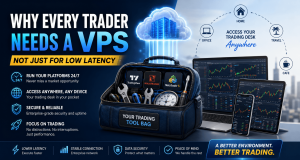
This is why serious traders increasingly rely on specialized trading VPS infrastructure.
A properly optimized VPS allows trading systems to operate inside professional datacenters with stable power, enterprise-grade networking, and low-latency routing to exchanges and broker infrastructure. Instead of relying on a local desktop environment, automated systems remain online continuously inside infrastructure designed specifically for financial applications.
For latency-sensitive trading strategies, geographic location also becomes critically important. Futures traders often deploy systems close to CME infrastructure in Chicago, while forex traders commonly use London or New York datacenters to reduce routing distance to major liquidity providers.
Reducing physical distance between your VPS and exchange infrastructure directly improves execution speed.
How TradingVPS Supports Modern Algorithmic Trading
TradingVPS is designed specifically for traders operating latency-sensitive systems across futures, forex, equities, crypto, and automated API-driven strategies.
Unlike generic cloud hosting environments, TradingVPS focuses on infrastructure optimized for trading performance. The platform provides low-latency VPS locations positioned strategically for different asset classes and trading regions. Traders can deploy systems closer to exchange routes while maintaining stable uptime and uninterrupted execution environments.
For CME futures traders, Chicago VPS infrastructure offers strong connectivity for platforms like NinjaTrader, Sierra Chart, Quantower, Bookmap, and Rithmic-based execution systems. Forex traders can benefit from London and Amsterdam routing optimized for expert advisors and automated FX strategies. New York infrastructure supports equities, options, and multi-asset workflows requiring low-latency U.S. market access.
TradingVPS also supports a wide range of professional trading platforms including MetaTrader 4, MetaTrader 5, NinjaTrader, TradingView, Tradovate, Quantower, Sierra Chart, and Bookmap. This flexibility allows traders to build advanced multi-platform environments without relying on residential hardware.
Another important advantage is operational stability. Automated trading systems frequently run continuously throughout the week, particularly in futures, forex, and crypto markets. Stable VPS infrastructure reduces the risks associated with local system failures and allows trading systems to remain active around the clock without depending on a trader’s home internet connection or desktop uptime.
As trading automation becomes more infrastructure-dependent, VPS performance increasingly becomes part of overall trading performance itself.
Building a Reliable Trading Infrastructure Stack
Professional algorithmic trading is no longer just about strategy logic. It is about building an entire ecosystem where data, execution, hosting, and reliability work together seamlessly.
Strong trading infrastructure usually combines several important components simultaneously. Traders need reliable market data feeds, stable broker connectivity, low-latency VPS hosting, accurate historical datasets, and redundancy systems capable of handling unexpected interruptions. Weakness in any one of these areas can negatively impact overall performance.
This is why professional firms invest heavily in infrastructure engineering. Speed alone is not enough. Stability, consistency, and reliability matter equally.
Retail traders are now gaining access to many of the same infrastructure advantages that were once limited to institutional firms. Low-latency VPS hosting, direct API connectivity, advanced historical datasets, and professional-grade automation tools are becoming increasingly accessible.
As competition within electronic markets continues growing, infrastructure quality will likely become even more important over time.
Final Thoughts
Selecting the right market data infrastructure is one of the most important long-term decisions in algorithmic trading. High-quality data improves strategy accuracy, strengthens backtesting reliability, reduces execution errors, and creates more stable automated trading environments.
At the same time, reliable market data alone is not enough. Traders also need infrastructure capable of processing that data efficiently under real-world market conditions. Low-latency VPS hosting plays a major role in ensuring that automated systems remain stable, connected, and responsive during volatile trading periods.
By combining reliable market data providers with optimized hosting infrastructure from TradingVPS, traders can build systems designed for the speed and complexity of modern electronic markets.
FAQs
The best provider depends on your strategy. Real-time traders often prefer low-latency providers like Polygon.io, while quantitative researchers may prefer historical-focused providers like EODHD or Databento.
Many professional traders use multiple providers for redundancy, historical research, and execution reliability.
Chicago is generally preferred because CME exchange infrastructure is located there, reducing routing latency for futures traders.
Tick-level historical data with split and dividend adjustments provides the most accurate environment for professional backtesting.