Introduction to Polymarket Trading in 2026
What Is Polymarket?
Polymarket is a decentralized prediction market where traders speculate on real-world events by buying and selling outcome-based shares. Each market typically revolves around a binary question—such as “Will X happen?”—with shares priced between $0.00 and $1.00.
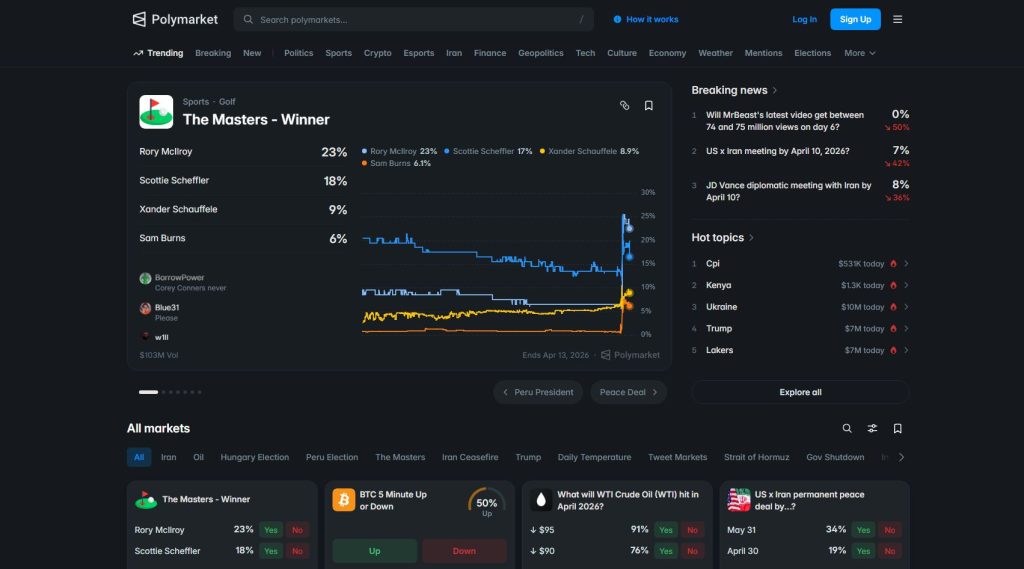
If your prediction is correct, the share settles at $1.00, while incorrect outcomes go to $0.00. This simple structure transforms complex global events—politics, crypto, economics, and more—into tradable financial instruments.
Unlike traditional betting platforms, Polymarket operates more like a financial exchange. Prices dynamically reflect collective market probability, meaning a share trading at $0.65 implies a 65% perceived chance of that outcome occurring.
This creates a powerful environment where information, speed, and strategy determine profitability—not luck.
Growth of Prediction Markets in 2026
In 2026, prediction markets have entered a new phase of rapid expansion and mainstream adoption.
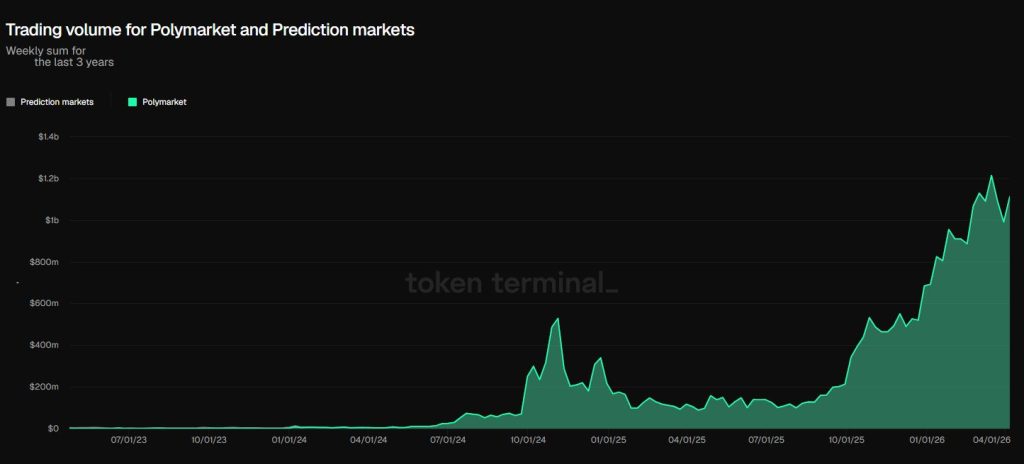
What was once a niche sector has evolved into a high-liquidity, data-driven trading ecosystem. Several key trends are driving this growth:
- Massive Increase in Trading Volume
Prediction markets now process billions in volume, fueled by global interest in politics, macroeconomics, and crypto-related events. - Institutional Curiosity and Participation
Hedge funds, quant traders, and data scientists are increasingly exploring prediction markets as alternative alpha sources. - Improved Market Efficiency
With more participants, prices adjust faster to new information—reducing obvious mispricings. - Real-Time Information Integration
Markets react instantly to news, social media signals, and economic data releases.
As a result, Polymarket in 2026 is no longer a “casual betting platform”—it is a competitive trading arena where only disciplined, data-driven participants consistently win.
Why Traditional Trading Strategies No Longer Work
In earlier stages, traders could profit from simple intuition or headline-based speculation. That edge is now largely gone.
Here’s why:
- Markets Price in Information Faster Than Ever
By the time most retail traders react to news, prices have already adjusted. - Crowd Behavior Is More Sophisticated
Participants are increasingly informed, reducing obvious inefficiencies. - Emotional Trading Gets Punished Quickly
Panic buying or selling often leads to poor entry and exit points. - Basic “Guessing” Has Negative Expected Value
Without a structured approach, most traders lose over time.
In 2026, success on Polymarket requires shifting from speculation to systematic trading. The focus is no longer on being “right”—it’s about identifying mispriced probabilities and executing efficiently.
The Importance of Data, Speed, and Execution
Modern Polymarket trading revolves around three critical pillars:
1. Data Advantage
Successful traders rely on:
- Historical probability models
- Event-specific research
- Real-time news aggregation
- On-chain and order book analytics
Data transforms trading from guesswork into probability-based decision-making.
2. Speed (Latency Matters)
Opportunities—especially arbitrage and momentum trades—exist for seconds, not minutes.
A delay of even a few milliseconds can mean:
- Missing a profitable arbitrage window
- Entering after the price has already moved
- Losing priority in the order book
Speed is no longer optional—it’s a core competitive advantage.
3. Execution Precision
Even with the right idea, poor execution kills profitability.
Winning traders:
- Use limit orders strategically
- Monitor order book depth and liquidity
- Avoid slippage and wide spreads
- Automate entries and exits
Execution is where theory turns into actual profit.
Why TradingVPS Is a Game-Changer
This is where TradingVPS becomes essential.
In a market where speed and uptime directly impact profitability, running your strategies on a low-latency, always-on VPS provides a significant edge:
- Ultra-Low Latency Execution
Place orders faster than competitors and capture fleeting opportunities. - 24/7 Market Access
Prediction markets never sleep—your infrastructure shouldn’t either. - Automation Ready
Deploy arbitrage bots, momentum systems, and monitoring scripts without interruption. - Stability During High Volatility
Avoid crashes, disconnects, or missed trades during major news events.
For serious traders in 2026, TradingVPS is not just a convenience—it’s a critical component of a profitable trading stack.
Why Strategy Matters More Than Ever
Market Efficiency Is Increasing
As Polymarket continues to grow, market efficiency is rising rapidly.
In simple terms:
More participants + more capital = fewer easy opportunities.
In the past, traders could find obvious mispricings with minimal effort. Today, those inefficiencies are quickly eliminated due to:
- High-frequency traders scanning markets constantly
- Bots exploiting arbitrage gaps instantly
- Faster dissemination of global information
This means:
- Easy profits are rare
- Edges are smaller and shorter-lived
- Precision is required to stay profitable
Traders must now compete in a high-efficiency environment, where only well-defined strategies can consistently generate returns.
Retail Traders vs Data-Driven Traders
One of the biggest divides in Polymarket trading is between:
Retail Traders
- Trade based on opinions or headlines
- React emotionally to news
- Lack structured risk management
- Often chase momentum too late
Data-Driven Traders
- Use models and probability frameworks
- Focus on expected value (EV), not predictions
- Execute systematically
- Track and optimize performance over time
The result?
Only a small percentage of traders consistently generate profits, while the majority operate at a negative expected value.
The key difference is not intelligence—it’s approach.
Winning traders treat Polymarket like a quantitative trading environment, not a guessing game.
Automation & Speed Edge
In 2026, manual trading alone is no longer enough to stay competitive.
The biggest edge comes from automation combined with infrastructure.
Why Automation Wins
- Arbitrage opportunities disappear in seconds
- Markets react instantly to breaking news
- Humans cannot monitor dozens of markets simultaneously
Automation allows traders to:
- Scan hundreds of markets in real time
- Execute trades instantly when conditions are met
- Remove emotional bias from decisions
The Role of VPS Infrastructure
Running these systems locally introduces major risks:
- Internet instability
- Power outages
- Latency delays
- Missed opportunities
A dedicated TradingVPS environment solves these problems by providing:
- Consistent uptime (24/7 operation)
- Faster execution speeds
- Reliable bot deployment
- Reduced latency to trading endpoints
The Competitive Reality
Today’s Polymarket ecosystem is shaped by:
- Algorithmic traders
- Data-driven decision-making
- Infrastructure advantages
If you are trading manually without automation or a VPS, you are effectively competing at a structural disadvantage.
To stay competitive in 2026, traders must combine:
- Strategy + Data + Automation + Infrastructure
This is the foundation of consistent profitability.
Top 10 Polymarket Trading Strategies in 2026
As prediction markets become more competitive, traders need clear and repeatable strategies instead of relying on guesswork. Below are ten of the most effective Polymarket trading strategies in 2026, ranging from low-risk arbitrage opportunities to data-driven speculative methods.
1. Binary Complement Arbitrage (YES + NO < $1)
This strategy involves buying both the YES and NO sides of the same market when their combined price is less than $1.00. Since one side must resolve as the winner, traders can lock in a guaranteed profit if both positions are filled at the right prices.
2. Multi-Outcome Bundle Arbitrage
In markets with multiple outcomes, traders buy one share of every possible result when the total cost of all outcomes is below $1.00. Because one option must win and pay $1.00, this creates a low-risk arbitrage opportunity.
3. Catalyst Momentum Trading
Catalyst momentum trading focuses on reacting quickly to breaking news, major announcements, or market-moving events. Traders aim to enter early during rapid repricing and exit once the broader market catches up.
4. Settlement-Edge Trading
This strategy is based on understanding the exact market resolution rules rather than following headlines or public sentiment. Traders profit when the crowd misinterprets how a market will actually settle.
5. Term Structure Spread Trading
Term structure trading compares similar markets with different expiration dates. Traders look for pricing inconsistencies between short-term and long-term contracts, then trade the spread as prices normalize.
6. Correlation Hedging
Correlation hedging uses related markets to reduce risk and isolate value opportunities. Traders combine positions in markets that historically move together, aiming to profit from pricing differences rather than outright predictions.
7. Cross-Platform Arbitrage
This strategy takes advantage of price gaps between Polymarket and other prediction market platforms. Traders buy on the cheaper platform and sell or hedge on the more expensive one to secure profit.
8. High-Probability “Favorite” Compounding
Traders focus on highly likely outcomes priced at strong probabilities. While returns per trade are smaller, repeated wins can generate steady portfolio growth over time when managed carefully.
9. “No” Bias Exploitation
Many retail traders overpay for exciting or unlikely outcomes, causing YES prices to become inflated. Experienced traders take the opposite side by buying NO shares at favorable prices.
10. Whale Copy Trading
Because blockchain activity is transparent, traders can track successful wallets and follow their positions. By identifying consistent high-performing traders, others can mirror moves before the broader market reacts.
How TradingVPS Gives You an Edge
Low Latency Execution
In prediction markets, speed can directly impact profitability. Prices can change within seconds after breaking news, sudden sentiment shifts, or major economic announcements. A low-latency TradingVPS helps traders place orders faster, improving the chances of better entries, quicker fills, and reduced slippage.
Our infrastructure is built for performance using AMD Ryzen 9 9950X processors, ultra-fast DDR5 RAM, and high-speed NVMe SSD storage. This combination delivers faster processing power, quicker strategy execution, and low system delays when running trading bots or monitoring software.
For traders focused on execution speed, location also matters. We offer VPS servers in:
- Dublin – excellent for European connectivity and stable routing
- Amsterdam – optimized for ultra-low latency API requests and fast exchange communication
This makes our VPS solutions ideal for traders who need every millisecond advantage when competing in fast-moving markets.
24/7 Bot Trading
Polymarket opportunities can appear at any time, including overnight, weekends, or during major live events. Running bots on a TradingVPS allows traders to monitor markets continuously and execute trades automatically without needing to stay online.
With powerful Ryzen 9 9950X CPUs, your trading systems can run multiple bots, scanners, and alert tools simultaneously without performance slowdowns. Combined with DDR5 RAM, this ensures smooth multitasking and responsive execution.
Our ultra-fast NVMe SSD storage helps bots load data quickly, write logs efficiently, and restart systems faster when needed.
This is ideal for:
- Capturing arbitrage gaps instantly
- Monitoring multiple markets 24/7
- Executing pre-programmed strategies
- Managing positions while you are offline
For serious automation traders, uninterrupted uptime can make a major difference over time.
Stability During Volatility
Major political events, economic reports, crypto headlines, and breaking news can create intense market volatility. During these moments, home internet issues, hardware limitations, or computer crashes can lead to missed opportunities and delayed execution.
A professional TradingVPS environment provides stronger reliability and stable connectivity during high-volume market conditions.
Our high-performance hardware stack includes:
- AMD Ryzen 9 9950X for powerful single-core and multi-core performance
- DDR5 RAM for fast data handling and responsive applications
- NVMe SSD storage for rapid system access and low-latency operations
This means your trading setup remains responsive even during peak traffic periods.
With strategically located servers in Dublin and Amsterdam, traders also benefit from strong network routes and lower latency compared with standard home setups.
Ideal for Automation Strategies
TradingVPS is a strong solution for traders who rely on automated systems and execution speed. Our premium hardware and low-latency network environment are built specifically for demanding trading workloads.
Popular use cases include:
- Arbitrage bots that scan markets for pricing inefficiencies
- Momentum bots that react instantly to breaking news
- Copy trading systems that follow successful wallets or signals
- Risk management tools that automate exits, stop-losses, and alerts
- API-based strategies requiring rapid request speeds through Amsterdam routing
Because our VPS servers use Ryzen 9 9950X CPUs, DDR5 memory, and NVMe SSDs, traders can run multiple tools efficiently with minimal lag.
For users focused on ultra-low latency API execution, our Amsterdam VPS location is especially valuable for fast request handling, while Dublin VPS offers another premium European option for stable low-latency trading performance.
For serious traders, reliable infrastructure is not just a convenience—it can become a real competitive advantage.
How to Start Trading on Polymarket (Step-by-Step)
1. Connect Wallet
Create and connect a compatible crypto wallet such as MetaMask, Coinbase Wallet, or another supported wallet. This wallet will be used to hold funds and interact with the platform.
2. Deposit USDC
Fund your wallet with USDC, which is commonly used for trading on Polymarket. You can transfer USDC from an exchange or purchase it directly through supported payment methods.
3. Choose Market
Browse available markets across politics, sports, economics, crypto, and current events. Select a market where you understand the topic or believe pricing may be inefficient.
4. Execute Trade
Buy YES or NO shares depending on your strategy. Some traders use market orders for speed, while others prefer limit orders for better pricing.
5. Manage Position
Monitor the market as probabilities move. You can hold until settlement or sell early to lock in profits or reduce losses.
6. Withdraw Profits
Once trades are closed or markets resolve, profits can usually be converted back into USDC and transferred back to your wallet or exchange account.
Risks of Polymarket Trading
Smart Contract Risk
As a blockchain-based platform, Polymarket relies on smart contracts. Technical bugs, exploits, or unexpected vulnerabilities could affect funds or settlements.
Regulatory Uncertainty
Prediction markets may face legal restrictions depending on jurisdiction. Rules can change over time, impacting platform access or market availability.
Liquidity Issues
Some markets have limited trading volume. This can make it difficult to enter or exit positions at desired prices, especially with larger trade sizes.
Binary Loss Risk
Many contracts are all-or-nothing. If the market resolves against your position, shares can lose most or all of their value.
Capital Lockups
Longer-term markets may tie up funds for weeks or months. This reduces flexibility and limits the ability to deploy capital elsewhere.
How Much Can You Make on Polymarket?
Profit potential depends on strategy, discipline, and capital size. Some traders earn steady smaller returns through low-risk arbitrage, while others pursue higher gains through speculation.
Realistic Expectations
Most beginners should focus on learning the platform and risk management rather than expecting fast profits. Consistency often matters more than large wins.
Arbitrage vs Speculation
- Arbitrage strategies usually offer smaller but more reliable returns.
- Speculative trades may offer larger upside but come with higher risk and volatility.
Compounding vs High-Risk Bets
Repeated smaller gains can compound over time and often outperform occasional risky trades. Many successful traders prioritize preservation of capital first.
Pro Tips for Consistent Profitability
Focus on Expected Value (EV)
Look for trades where the probability is mispriced. Long-term success often comes from making many positive expected value decisions rather than chasing predictions.
Avoid Emotional Trading
Do not chase losses or panic after price swings. Emotional decisions often lead to poor entries and exits.
Use Automation Tools
Alerts, bots, scanners, and VPS infrastructure can help traders react faster and manage opportunities more efficiently.
Diversify Strategies
Avoid relying on a single setup. Combining arbitrage, momentum, and rules-based trading can reduce risk.
Track Performance Metrics
Keep records of win rate, average return, risk exposure, and mistakes. Reviewing data helps improve future decision-making.
Conclusion: The Future of Polymarket Trading in 2026
Polymarket trading in 2026 is becoming more competitive, efficient, and data-driven. Easy opportunities are disappearing as more traders use models, bots, and advanced analytics.
Success increasingly depends on three factors:
- Strong strategy
- Fast execution
- Reliable infrastructure
For traders looking to compete seriously, a TradingVPS can provide a real edge through low latency, 24/7 uptime, and support for automated systems. As prediction markets continue to grow, traders who combine technology with discipline will be best positioned for long-term success.
FAQs
There is no single best strategy, but many traders favor low-risk approaches such as arbitrage, rules-based trading, and probability mispricing strategies.
It can be profitable for disciplined traders using structured strategies, but many participants lose money by trading emotionally or without risk management.
Arbitrage strategies profit from pricing inefficiencies, such as buying combinations of outcomes below guaranteed payout value.
A VPS is not required for casual users, but it can be highly valuable for traders using bots, automation, or strategies that depend on speed and uptime.